


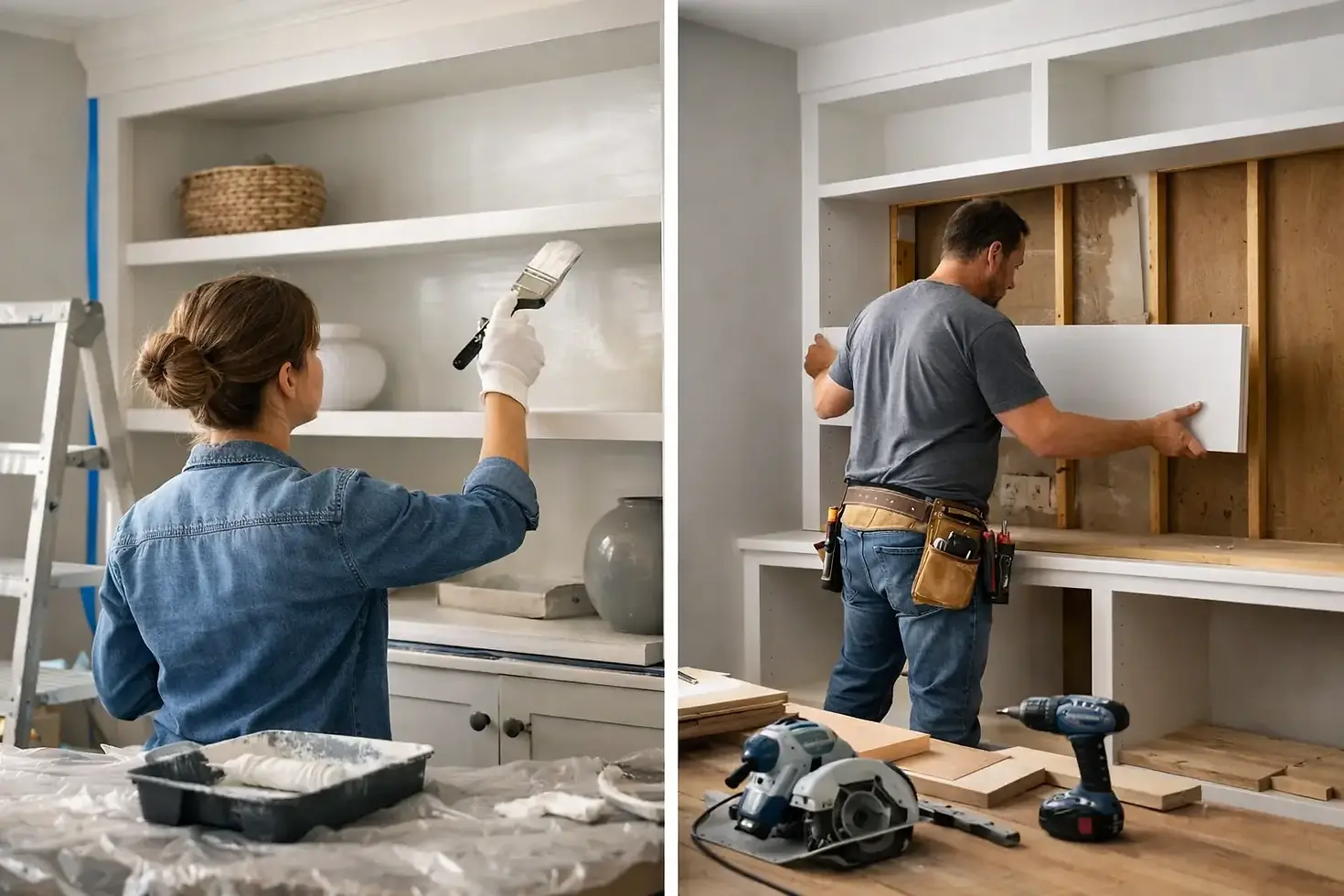
Painting Versus Replacing Built-Ins at Home
A wall of built-in bookcases can make a room feel established, useful, and distinctly yours. But when the stain feels dated, the paint is chipped, or the proportions no longer suit the room, homeowners often face the same question: painting versus replacing built-ins. The right answer is rarely about which option is cheapest on paper. It comes down to the condition of the piece, the quality of its construction, and what you want the room to become.
A well-made built-in is more than storage. It is architectural millwork, often tied into baseboards, crown molding, flooring, and surrounding walls. Replacing it can be the right call when the layout is failing or the materials have reached the end of their useful life. In many Chicago homes, though, a careful refinishing process can preserve excellent craftsmanship while giving the entire room a dramatic new direction.
Start With What Your Built-Ins Are Telling You
Before choosing paint colors or sketching a new cabinetry plan, look closely at the built-in itself. Solid wood, furniture-grade plywood, and properly constructed MDF can all be refinished successfully when they are structurally sound. Doors should hang properly, shelves should not sag, and the unit should sit firmly against the wall without movement or significant water damage.
Cosmetic issues are usually good candidates for painting. Orange-toned oak, dark espresso stain, yellowed clear coats, minor scratches, and dated hardware can make quality cabinetry look tired long before it needs to be removed. A painted finish can change the visual weight of the piece, brighten a room, and make an older built-in feel intentional alongside newer furnishings.
Replacement deserves serious consideration when the problems go beyond the surface. Deep swelling from leaks, widespread veneer failure, crumbling particleboard, severe warping, or a layout that simply does not work can make refinishing a short-term fix. If the built-in blocks a needed doorway, lacks space for modern media equipment, or is too shallow for the items it needs to hold, a new design may provide more value.
The distinction matters. Painting can make an unattractive built-in beautiful. It cannot correct poor construction or create storage where there is none.
Painting Versus Replacing Built-Ins: The Cost Question
Painting is typically the lower-cost path because it preserves the existing cabinet boxes, shelves, trim, and installation work. But premium refinishing is not a quick coat of wall paint. Built-ins require a detailed process: cleaning away residue, repairing dents and seams, sanding or deglossing, priming for adhesion, applying a durable finish, and allowing proper cure time between stages.
The more intricate the millwork, the more preparation matters. Raised-panel doors, inset shelving, beadboard backing, ornate trim, and multiple sheen transitions all demand patience. A finish that looks smooth in a photograph is usually the result of careful surface preparation, not luck with a paint color.
Replacement costs can rise quickly because the project often includes demolition, carpentry, electrical adjustments, drywall repair, trim work, new materials, installation, and finishing. Custom cabinetry also involves design decisions that can lengthen the project. That investment makes sense when you are solving a meaningful functional problem or pursuing a major renovation with a clear long-term plan.
Homeowners sometimes compare a refinishing estimate directly with the price of a basic stock cabinet system. That comparison can be misleading. A new built-in should be evaluated against the construction quality and visual integration of what you already have. Removing original millwork from a well-built older home just because its color feels wrong can mean giving up details that are difficult and expensive to reproduce.
When Paint Gives You the Bigger Design Return
Paint has an unusual ability to change the role built-ins play in a room. The same bookcase can become quiet and architectural in a wall-matched color, or it can become the room's focal point in a deep blue, softened black, warm green, or carefully chosen neutral.
For a living room, painting built-ins to match the walls can reduce visual clutter and let art, books, and collected objects take center stage. In a dining room or home office, a richer cabinet color can add depth without making the room feel closed in. A lighter finish can also make a large built-in feel less imposing, especially in spaces with limited natural light.
Sheen deserves as much attention as color. Flat wall paint may look elegant nearby, but it is not the right finish for a surface that will be touched, cleaned, and bumped by chairs or books. Built-ins generally need a more durable coating with a controlled sheen that suits the room. Too much shine can reveal every imperfection and make cabinet faces look plastic. Too little can be difficult to maintain. The best choice depends on the profile of the millwork, the lighting, and how the space is used.
Hardware can complete the transformation. New pulls, knobs, hinges, or even a more refined latch can make painted cabinetry feel tailored rather than merely updated. This is one reason refinishing can be so satisfying: it allows the bones of a room to stay in place while the personality changes completely.
When Replacement Is Worth the Disruption
There are times when replacement is the more honest solution. If a family needs closed storage instead of open shelves, a media wall must accommodate larger equipment and hidden wiring, or a once-formal bookcase needs to become a functional bar or home office, a redesigned built-in can improve daily life in ways paint cannot.
Replacement can also be worthwhile when proportions are off. Built-ins that stop awkwardly below the ceiling, feel too shallow, or do not relate to surrounding trim can date a room even after they are painted. A skilled carpenter can revise the scale, add lighting, extend cabinetry, or create a cleaner connection to the architecture.
Consider replacement carefully if your renovation includes new flooring, a kitchen reconfiguration, or changes to nearby walls. Coordinating a new built-in during broader construction is usually less disruptive than tearing into finished rooms later. It is also the moment to think through electrical outlets, charging stations, display lighting, and ventilation for electronics.
Still, replacement is not automatically an upgrade. A newly built unit with lesser materials or generic proportions may not have the presence of original custom millwork. Good design and workmanship matter more than newness alone.
The Finish Is Only as Good as the Preparation
One of the biggest risks in painting built-ins is treating them like ordinary walls. Cabinets and shelving collect hand oils, furniture polish, cooking residue, dust, and years of cleaning products. Without thorough cleaning and the right adhesion steps, paint can chip around handles, peel along edges, or fail where doors and trim meet.
A professional refinishing approach begins with evaluating the existing coating and substrate. Repairs are made before paint goes on, not hidden beneath it. Nail holes, dings, open joints, old hardware holes, and rough edges all need attention. The surfaces are then prepared and primed according to the material and existing finish, followed by durable topcoats applied with consistency.
Protection of the home matters, too. Built-ins are attached to finished walls and often sit near hardwood floors, rugs, and upholstered furniture. A careful team controls dust, masks adjacent surfaces precisely, and keeps the work area orderly. The goal is not simply to leave behind a better color. It is to leave the room ready to enjoy.
Make the Decision With the Whole Room in Mind
Do not evaluate a built-in in isolation. Look at the flooring, wall color, trim, lighting, nearby cabinetry, and the amount of visual contrast already in the space. A dark built-in may feel heavy because the walls are also dark, or because the room lacks layered lighting. A replacement plan may be driven by a storage issue that could be resolved by changing shelf spacing and adding doors instead.
It helps to ask a few practical questions: Is the structure sound? Does the current layout support how we live? Would a different color and hardware make us happy with it? Are we renovating the room around it, or are we trying to make the built-in disappear? Clear answers usually point toward the right investment.
For homeowners who value the character of their existing millwork but want a finish with a more refined point of view, Artist Painters brings the same care to built-ins that we bring to walls, cabinetry, and detailed interior surfaces. The work is in the preparation, the sheen, and the small decisions that make the finished piece belong in the room.
A built-in does not have to be original to be worth keeping, and it does not have to be replaced to feel entirely new. Give the decision the same attention you would give any permanent part of your home, then choose the path that makes you want to use the room more often.


