


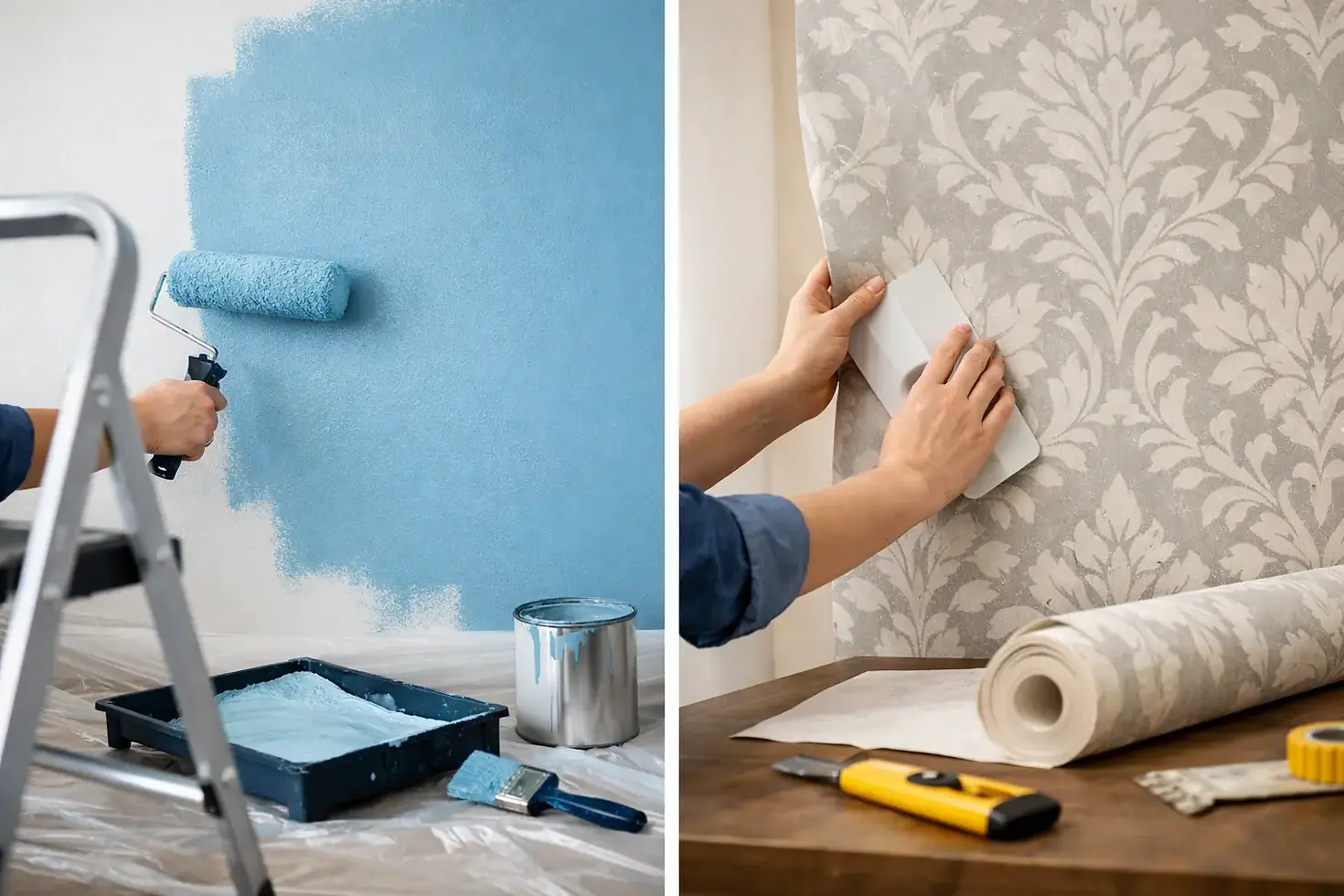
Painting Walls vs Wallpaper: Which Fits Best?
A freshly painted room can make millwork look sharper, ceilings feel taller, and natural light work harder. Wallpaper can make the same room feel collected, layered, and intentionally designed before a single piece of furniture moves in. When homeowners weigh painting walls vs wallpaper, the right answer is rarely about which option costs less at the start. It is about the room, the existing surfaces, how you live in the home, and the level of visual impact you want every day.
For many Chicagoland homes, the strongest design is not an either-or decision. Paint often creates the calm, durable foundation, while wallpaper gives one carefully chosen wall, powder room, bedroom, or dining space its own point of view.
Painting Walls vs Wallpaper: Start With the Room
Before choosing a finish, consider what the room needs to do. A busy family hallway has different demands than a formal dining room. A sun-filled primary bedroom calls for a different approach than a small powder room where guests are likely to notice every detail.
Paint is usually the more versatile choice for large, connected spaces. It gives a home visual continuity from room to room and makes future changes to furniture, artwork, and textiles easier. The right paint color and sheen can be understated or dramatic, but the finish remains a flexible backdrop.
Wallpaper is often best when the walls themselves should be part of the design. Pattern adds movement, texture can introduce warmth, and a mural-like print can establish a mood that paint alone cannot replicate. In a powder room, entry, nursery, or dining room, wallpaper can turn a functional space into a memorable one.
The scale of the room matters. Large patterns can feel confident in a spacious dining room but overwhelming in a narrow hallway. Small-scale prints may bring charm to a compact bathroom, yet get lost across an open living room. Samples should be viewed on the actual wall, in morning and evening light, before a final decision is made.
When Paint Is the Better Investment
A premium paint job is not simply color applied to drywall. The lasting result comes from surface preparation: repairing cracks, smoothing patches, caulking trim transitions, sanding where needed, priming problem areas, and selecting a sheen that suits the room.
Paint is an especially practical choice when walls have minor imperfections that can be properly repaired before finishing. It also works well in high-traffic areas where future touch-ups may be necessary. A well-matched paint color can often be refreshed without redoing an entire room, provided the original finish and application were done with care.
For homeowners who enjoy updating their interiors every few years, paint offers more freedom. A new color can shift the character of a room from airy to grounded, traditional to modern, or quiet to energetic without the commitment of replacing wallcovering.
Paint also gives designers more control over sheen. Flat and matte finishes can create a soft, sophisticated look in low-traffic spaces, though they may be less forgiving of scuffs. Eggshell and satin are common choices for living areas, halls, and bedrooms because they provide a modest amount of washability. In kitchens, baths, and areas used by children or pets, a more durable finish may make sense. The best sheen is never a default choice - it should support the wall condition, lighting, and daily use of the space.
Paint has limits, too
Paint will not hide serious wall problems. Old repairs, uneven drywall, failing tape seams, water damage, or textured surfaces may need meaningful restoration before a refined finish is possible. Dark colors and high-sheen paints can also reveal imperfections more readily than a soft neutral matte.
A quality painter will address those realities early, rather than promising that a fresh coat will solve every surface issue. That honest preparation is what gives painted walls their clean, intentional appearance.
When Wallpaper Earns Its Place
Wallpaper brings dimension that paint cannot fully duplicate. Grasscloth, linen-look wallcoverings, hand-painted papers, botanicals, geometrics, and subtle tonal patterns all interact with light differently throughout the day. Even a quiet wallpaper can give a room depth and character that reads as custom.
It is particularly effective in spaces where people pause and look closely. A powder room is a classic example because it is small enough to be bold without dominating the house. A dining room can benefit from wallpaper’s richness at night, especially under warm lighting. In bedrooms, it can create a focal wall behind the bed without requiring every wall to carry the same visual weight.
Quality wallpaper can also be durable. Many modern wallcoverings are designed to be wiped clean, and certain commercial-grade or vinyl options perform well in high-use areas. Still, durability depends on the material, installation, ventilation, and the condition of the wall beneath it.
Wallpaper requires more exacting preparation
Wallpaper installation is a precision trade. Seams must align, patterns must match, corners need careful planning, and the wall must be clean, smooth, dry, and properly primed. A small defect that might disappear under paint can telegraph through wallpaper. So can adhesive residue, loose drywall paper, and poorly repaired patches.
This is one reason wallpaper is not always the shortcut it appears to be. The material itself may be expensive, and installation can take time, particularly with complex patterns, fragile papers, tall walls, or rooms with many doors, windows, and built-ins. If an older wallcovering needs to come down first, removal and surface restoration should be included in the project plan.
Cost, Longevity, and Future Changes
At first glance, paint is often less expensive than wallpaper. The materials are generally more affordable, the labor is more straightforward in an empty, well-prepared room, and future color changes are relatively simple.
Wallpaper can cost more because there are two major expenses: the wallcovering and the installation. Pattern repeats create waste, so ordering enough material requires careful measuring. Specialty papers may need extra lead time, and a damaged section cannot always be replaced unless additional rolls were purchased from the same dye lot.
But initial cost is only one part of value. A beautiful wallpaper in a small powder room may deliver more design impact per square foot than nearly any other finish. Conversely, repainting a broad, open-plan first floor may provide the better return if the goal is to brighten the home, unify a renovation, or improve the appearance of worn walls.
Longevity also depends on lifestyle. Painted walls are easier to change. Wallpaper can last for years when installed correctly and treated well, but removing it later can involve steam, stripping solutions, adhesive cleanup, and skim coating before repainting. Homeowners who know they will want a different look soon may prefer paint. Those who have found a pattern they truly love may be happy to live with it for a long time.
A Balanced Approach Often Looks Best
The most polished homes use finishes with purpose. Consider painting the main walls in a carefully selected neutral or saturated color, then using wallpaper in a room where it can feel special. Paint the hallway and staircase for continuity; use wallpaper in the adjacent powder room for surprise. Keep bedroom walls calm and bring pattern to the wall behind the headboard. Let a dining room’s wallpaper set the tone while crisp painted trim frames it.
This approach also helps manage budget and future flexibility. Wallpaper becomes a deliberate feature rather than a decision that has to carry every room. Paint keeps the home cohesive, while the right wallcovering provides moments of personality.
For a more artistic alternative, a custom mural can offer some of wallpaper’s visual drama while being tailored to the architecture, palette, and scale of the room. It is an especially compelling option when a homeowner wants something personal rather than a repeat pattern.
What to Decide Before Requesting a Quote
Bring a few practical answers to the conversation: which room is changing, whether the walls have damage or existing wallpaper, how much traffic the space receives, and whether you expect to redecorate in the next few years. Photos, paint chips, fabric swatches, and wallpaper samples are all useful. They help a finishing professional assess not just color, but sheen, surface condition, transitions at trim, and the work required for a result that looks complete.
Artist Painters approaches these decisions with the same care we bring to the work itself. Sometimes a beautifully prepared painted finish is exactly what the room needs. Sometimes wallpaper is the detail that makes the entire design click. And sometimes the best answer is both.
Choose the finish that will still feel right when the room is lived in, not just when it is photographed. A thoughtful consultation and proper preparation make that decision easier - and make the finished space feel like it truly belongs in your home.


